Polycaprolactone (PCL) vs. Blended Thermoplastics: Choosing the Right Material
Abstract
The choice of base polymer significantly impacts thermoplastic performance in clinical settings. This technical comparison examines Polycaprolactone (PCL) versus proprietary blended formulations, evaluating molding time, working window, rigidity, patient comfort, and durability. MAIDFIRM’s material scientists explain how our optimized PCL-based formulations achieve the ideal balance: 3–5 minute working time, excellent stretch characteristics, non-stick surface properties, and reliable rigidity at room temperature.
1. Introduction: Why Base Polymer Selection Matters
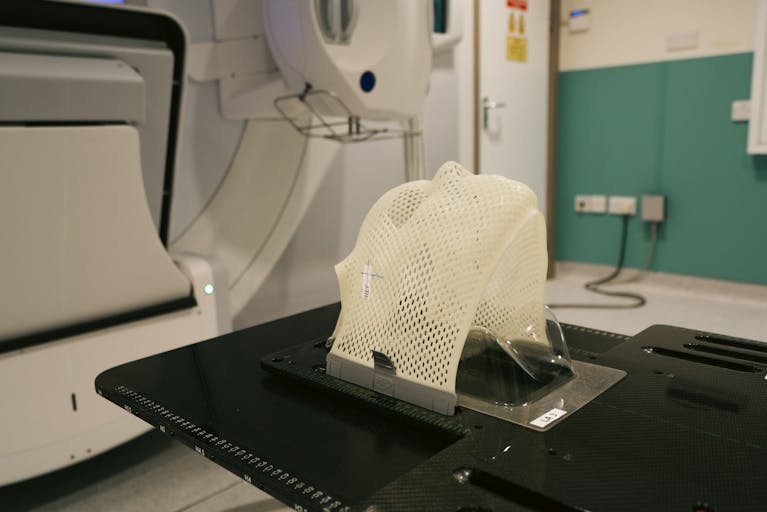
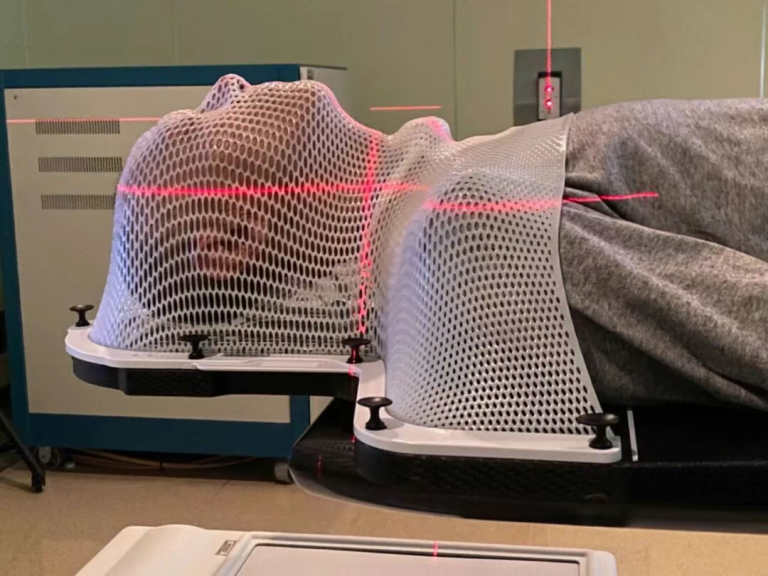
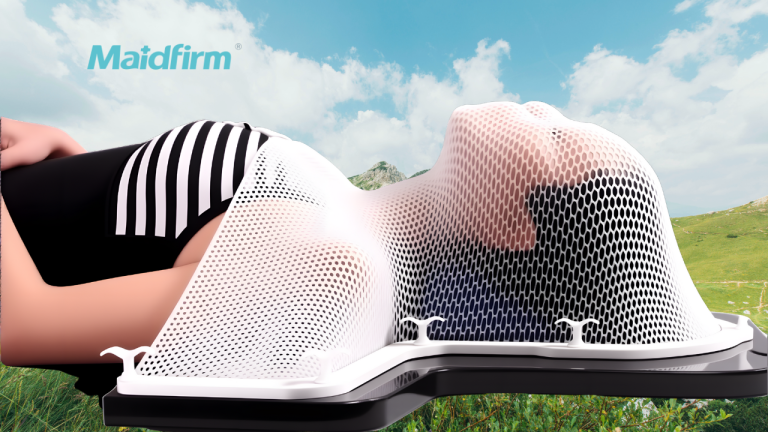
In medical thermoplastic applications—especially in radiotherapy immobilization masks—material selection is not just a manufacturing decision, but a clinical performance factor.
Two of the most commonly used material systems are:
- Polycaprolactone (PCL)-based thermoplastics
- Blended thermoplastic formulations (multi-polymer systems)
Each system behaves differently under heat, stress, and clinical molding conditions, directly affecting:
- Patient positioning accuracy
- Clinical workflow efficiency
- Mask durability and reuse potential
- Overall patient comfort
Understanding these differences is essential for hospital procurement teams and medical distributors.
2. Understanding Polycaprolactone (PCL)
Polycaprolactone (PCL) is a semi-crystalline biodegradable polyester widely used in medical thermoplastics due to its unique thermal and mechanical properties.
Key Characteristics of PCL:
- Low melting temperature (~58–60°C)
- Excellent moldability
- High elasticity during heating phase
- Good biocompatibility
- Stable re-hardening after cooling
PCL is widely used as the base polymer in radiotherapy thermoplastic sheets due to its predictable behavior.
3. Blended Thermoplastics: Multi-Polymer Engineering Approach
Blended thermoplastics combine PCL with other polymer modifiers such as:
- EVA (Ethylene Vinyl Acetate)
- TPU (Thermoplastic Polyurethane)
- Stabilizers and elasticity modifiers
Purpose of Blending:
- Adjust rigidity
- Improve durability
- Control working time
- Enhance surface texture
Blended systems offer greater customization but require more precise formulation control.
4. Key Performance Comparison
4.1 Molding Time and Working Window
PCL-Based Materials:
- Faster softening
- Predictable activation
- Shorter but stable working window
Blended Thermoplastics:
- Adjustable working time
- Can be extended or shortened via formulation
- More variability depending on composition
👉 Clinical impact:
A controlled 3–5 minute working window is ideal for radiotherapy mask molding.
4.2 Elasticity and Stretch Behavior
PCL:
- Excellent stretch during molding
- Smooth adaptation to facial anatomy
- Low risk of cracking during shaping
Blends:
- Higher structural stiffness in some formulations
- Reduced stretch depending on polymer ratio
👉 Clinical importance: Better stretch = better contour accuracy.
4.3 Surface Properties (Non-Stick Behavior)
PCL:
- Naturally smooth surface
- Reduced sticking to gloves or skin
- Easier clinical handling
Blended Materials:
- Can vary significantly
- Some formulations require surface treatment
👉 Non-stick behavior improves workflow efficiency in busy radiotherapy departments.
4.4 Final Rigidity and Stability
PCL:
- Reliable room-temperature rigidity
- Stable shape retention
- Predictable performance across batches
Blended Systems:
- Can achieve higher stiffness
- But may vary depending on composition consistency
4.5 Patient Comfort
PCL Advantages:
- Low thermal irritation
- Smooth molding experience
- Reduced pressure points after cooling
Blended materials may improve stiffness but sometimes compromise comfort if not properly balanced.
5. MAIDFIRM’s Optimized Material Solution
At MAIDFIRM, our material scientists have developed a next-generation PCL-based thermoplastic formulation designed specifically for radiotherapy immobilization.
Optimized Performance Balance:
✔ Working time: 3–5 minutes
✔ Excellent stretchability during molding
✔ Non-stick surface for clinical handling
✔ Strong rigidity after cooling
✔ Stable batch-to-batch performance
This formulation is engineered to bridge the gap between pure PCL flexibility and blended material rigidity.
6. Clinical Implications in Radiotherapy
Material selection directly impacts:
6.1 Positioning Accuracy
Better molding → better anatomical fit → higher treatment precision
6.2 Workflow Efficiency
Predictable working time reduces setup delays
6.3 Patient Experience
Smoother molding reduces anxiety and discomfort
6.4 Reproducibility
Stable materials ensure consistent positioning across treatment sessions
7. When to Choose PCL vs. Blended Systems
Choose PCL-based materials when:
- Patient comfort is priority
- Fast workflow is required
- High moldability is needed
Choose blended systems when:
- Extra rigidity is required
- Special clinical conditions exist
- Customized mechanical performance is needed
8. Why MAIDFIRM Material Design Stands Out
Unlike standard thermoplastic suppliers, MAIDFIRM focuses on clinical performance engineering, not just material production.
Our advantages include:
✔ ISO 13485 certified manufacturing
✔ CE compliant medical-grade materials
✔ Controlled polymer blending technology
✔ Low shrinkage and high dimensional stability
✔ OEM customization for global distributors
9. Conclusion
The choice between Polycaprolactone (PCL) and blended thermoplastics is ultimately a balance between moldability, rigidity, and clinical usability.
While pure PCL offers excellent flexibility and comfort, blended formulations provide tunable mechanical properties. The most effective solution often lies in optimized hybrid engineering.
Through advanced material science, MAIDFIRM delivers a PCL-based thermoplastic system that achieves the ideal clinical balance required for modern radiotherapy immobilization.
Contact MAIDFIRM
Website: www.splintmask.com
For inquiries:
- Free samples
- OEM cooperation
- Distributor partnerships
- Product quotations