Rehabilitation Exercises with Thermoplastic Braces: What Movements Can Be Done While Wearing Braces?
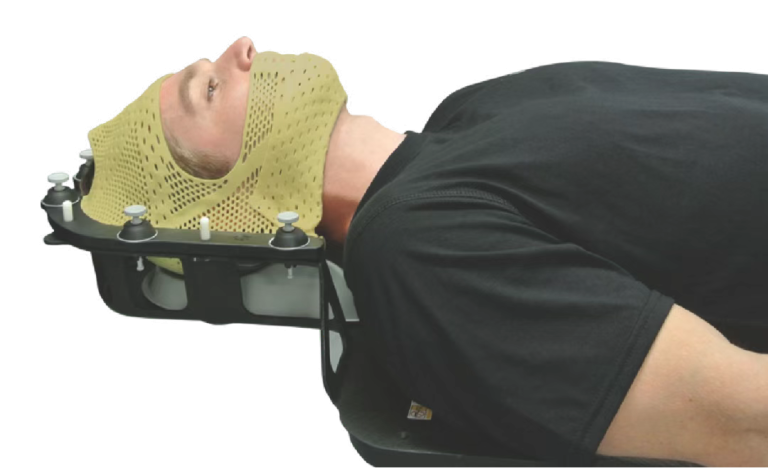
In modern orthopedics and rehabilitation medicine, the positioning of thermoplastic braces has long shifted from the outdated concept of “complete rigid immobilization” to “early mobilization under limited protection”. Prolonged complete rest can lead to muscular atrophy, joint adhesions and slowed local blood flow. In contrast, scientific therapeutic exercise with low-temperature thermoplastic braces provides rigid structural support. It leverages the physiological muscle pump effect to accelerate swelling reduction while preserving neuromuscular control of unaffected joints.
The Rehabilitation Team of Maidfirm has sorted out all brace-compatible exercises for different body parts and rehabilitation stages as follows.
I. Therapeutic Exercise Protocols for Upper Limbs (Hands, Wrists & Elbows)
For upper limb conditions, especially post-hand surgery patients, early exercise while wearing braces is critical to prevent tendon adhesions.
1. Active Range of Motion (Active ROM) for Unaffected Limbs & Unfixed Joints
Applicable Cases: Distal radius fractures, tenosynovitis, carpal tunnel syndrome
Movement Guidelines: When wearing wrist or forearm thermoplastic braces (maidifrm sheet materials allow precise cutting to fully expose the palmar creases and fingers), patients shall frequently perform thumb opposition, forceful full fist clenching and complete finger extension.
Rehabilitation Benefits: Boost venous and lymphatic drainage in the hand, continuously stretch forearm flexor and extensor tendons, and avoid finger joint stiffness.
2. Restricted Dynamic Resistance Grasping (Mid-stage Rehabilitation Only)
Applicable Cases: Patients wearing dynamic functional braces, 4 weeks post-tendon repair surgery
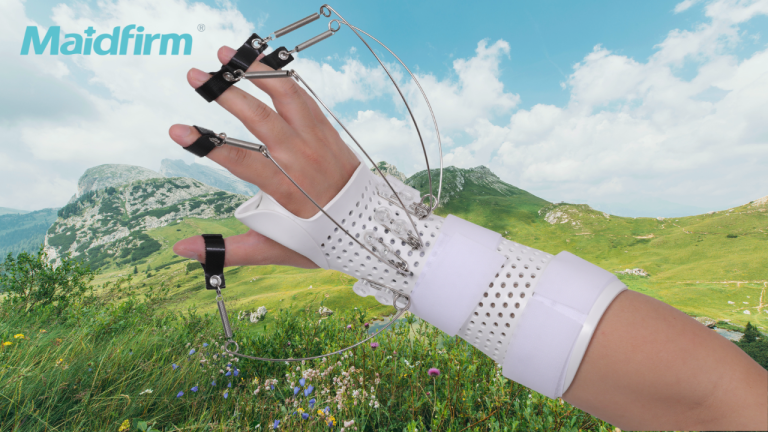
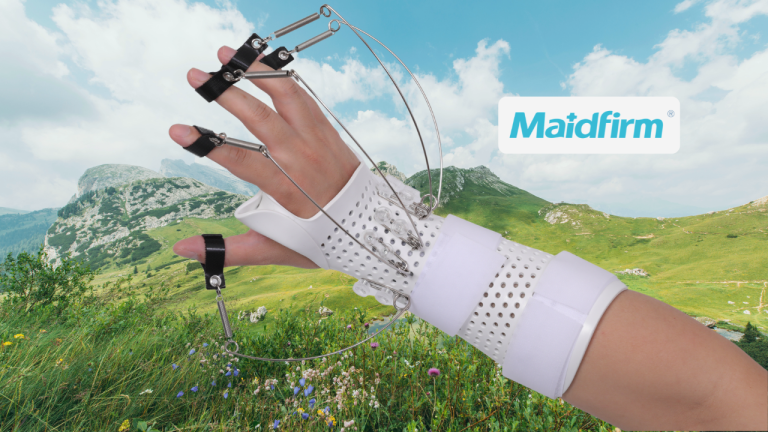
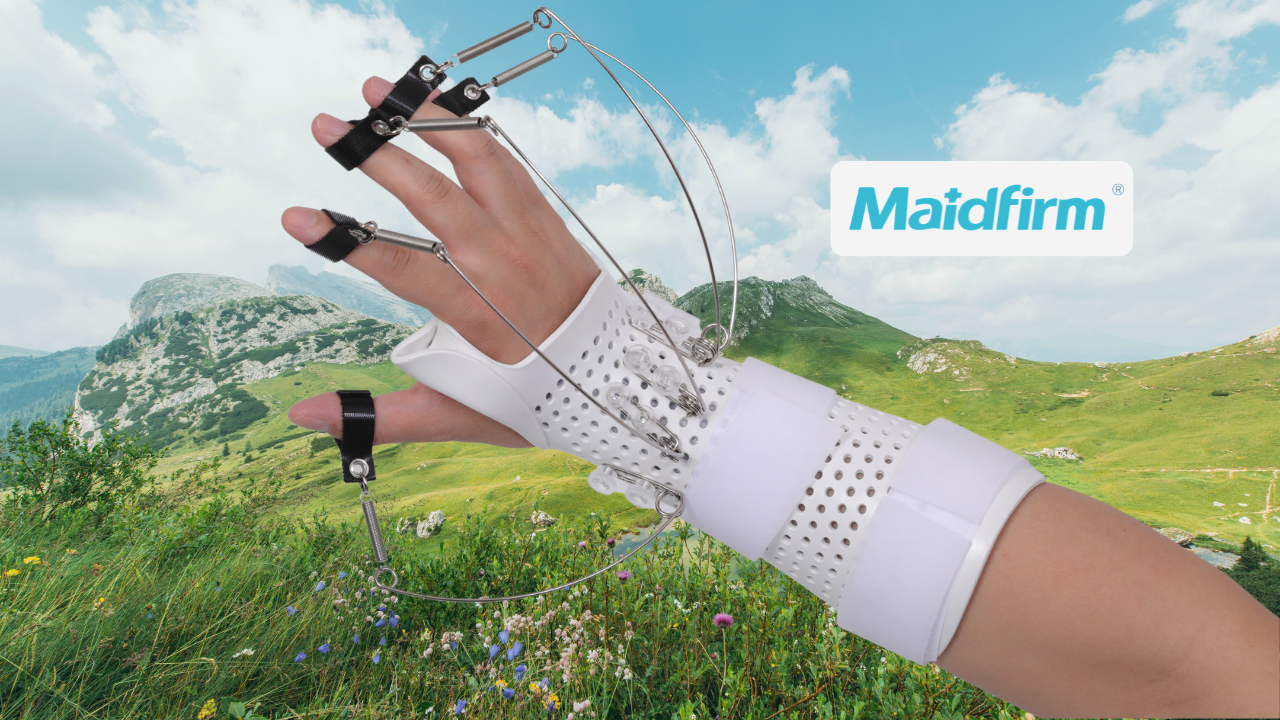
Movement Guidelines: Supported by the elastic cantilever of dynamic thermoplastic braces, perform resistive finger flexion and grasping against the mild rebound force of the brace, followed by passive finger extension driven by springs or latex tubes.
II. Therapeutic Exercise Protocols for Lower Limbs (Knees, Ankles & Feet)
The core goal of lower limb bracing is to prevent disuse muscular atrophy and prepare patients for weight-bearing ambulation at later rehabilitation stages.
1. Isometric Exercise
Applicable Cases: Knee ligament injuries, early phase (1–2 weeks) post lower limb fracture surgery
Movement Guidelines: Wear a semi-circular knee immobilizer or ankle brace and keep joints fully stationary. Rhythmically tense the quadriceps femoris or triceps surae, hold tension for 5–10 seconds, then fully relax.
Rehabilitation Benefits: This is the safest early rehabilitation workout. Reinforced maidifrm thermoplastic sheets (3.2mm or 4.0mm specifications) deliver extremely high mechanical rigidity after cooling. They effectively counteract shear force exerted on fracture sites by sudden muscle contraction, enabling muscle fiber activation with zero joint movement.
2. Straight Leg Raise (SLR)
Applicable Cases: Post-knee surgery, quadriceps weakness
Movement Guidelines: Lie supine on a bed. Secure the thermoplastic brace to lock the affected knee in neutral or slight flexion. Lift the entire affected leg straight off the bed to a roughly 30° angle, hold for 5 seconds, then lower slowly.
Rehabilitation Benefits: The brace acts as a temporary exoskeleton to protect the knee from abnormal torsion while delivering intensive training for iliopsoas and quadriceps muscles.
3. Ankle Pump Exercise
Applicable Cases: Patients with knee braces and unrestricted ankle mobility
Movement Guidelines: Stay lying in bed and keep thighs stationary. Forcefully push the foot downward (plantar flexion), then pull the toes upward hard (dorsiflexion).
Rehabilitation Benefits: Stimulate blood circulation throughout the lower extremities; this gold-standard movement effectively prevents postoperative deep vein thrombosis (DVT) of the lower limbs.
III. Three Non-Negotiable Safety Rules for Exercising with Braces
As a professional medical material manufacturer, the Technical Department of maidifrm reminds all physical therapists and patients to strictly comply with the following safety boundaries during brace-aided exercise:
- Pain Warning Principle Immediately halt any exercise that triggers sharp, stabbing pain at the injury site (distinguished from mild muscular soreness). Such pain usually indicates abnormal stress on fracture sites or damaged ligaments.
- Prevent Brace Slippage & Skin Friction Muscle girth changes momentarily during lower limb or elbow isometric contractions. If hook-and-loop fasteners lack a scientific reverse cross-tension design, the brace will slide repeatedly over limbs, easily causing blisters over bony prominences (olecranon process, fibular head, etc.). Always check and fully fasten all straps before exercise.
- Sweat Prevention & Skin Inspection Limbs sweat heavily during workouts; trapped moisture inside braces macerates the skin. We recommend maidifrm high-density microporous breathable sheets. After exercise, wipe sweat inside the brace with a dry towel, or loosen straps temporarily to clean the skin with physician approval.
IV. Conclusion: Polymer Materials as the Safety Belt for Human Kinetic Function
Low-temperature thermoplastic braces are not only designed for static immobilization, but also to accompany patients through active rehabilitation. Thanks to precise structural design and material modification technologies, maidifrm materials feature outstanding fatigue resistance. They withstand thousands of cycles of counteracting muscle stress during rehabilitation workouts without permanent deformation.
Leave immobilization to maidifrm, restore mobility to your limbs. Under professional physician guidance, actively move with your brace on — this is the golden rule to shed the brace and regain full mobility sooner.