Fabrication Guide for Dynamic Functional Splints with Low-Temperature Thermoplastic Sheets | Clinician Perspective
In clinical practice of Physical Therapy (PT) and Occupational Therapy (OT), splints are far more than static protective “shields”; they act as catalysts to facilitate functional recovery. While static splints deliver stable protection, prolonged wear tends to trigger joint adhesions and disuse muscular atrophy.
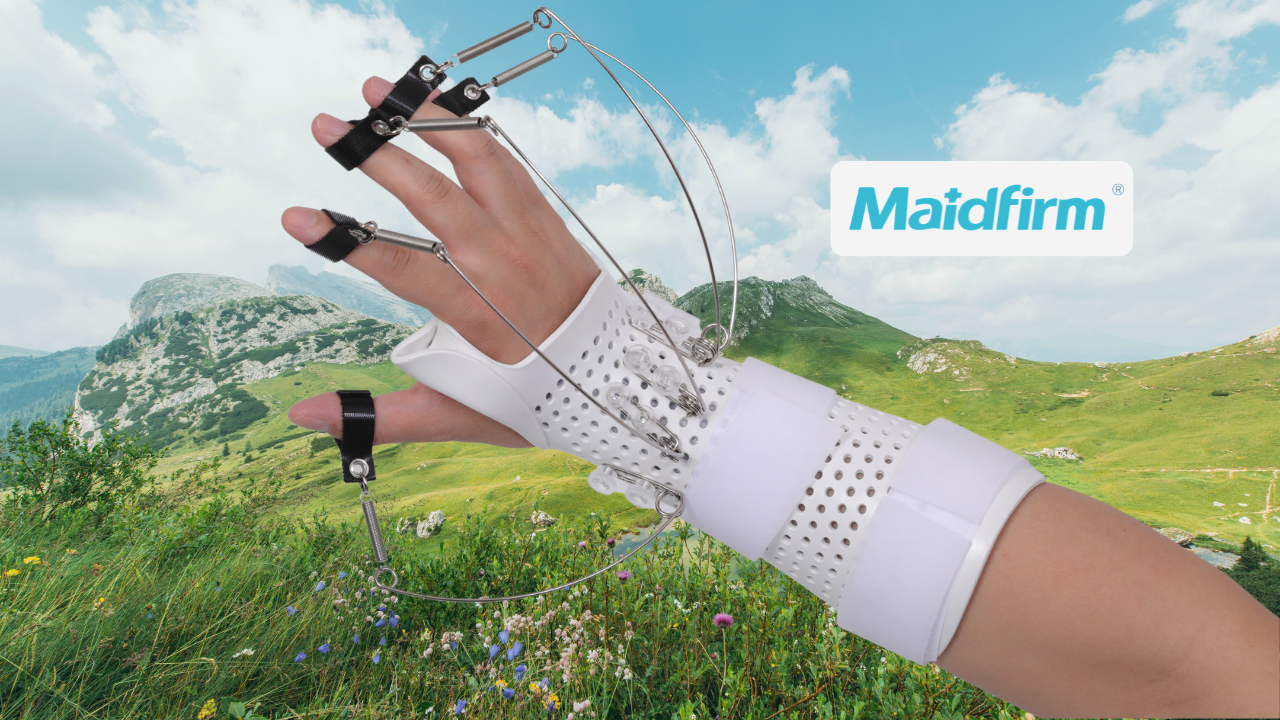
From a physiotherapist’s standpoint, dynamic functional splints serve as powerful tools to restore limb muscle tone and joint Range of Motion (ROM). Consisting of a static base combined with dynamic traction attachments including springs, elastic bands, pulleys or traction wires, they restrict abnormal movement patterns while permitting and guiding patients to perform active or assisted functional training of the affected limb.
The Clinical Rehabilitation Team of maidfirm offers in-depth analysis from a therapist’s viewpoint on building an efficient dynamic traction system with low-temperature thermoplastic sheets.
I. Core Mechanics of Dynamic Splints: Constant, Gentle Tension
When designing dynamic splints, physiotherapists must follow the principle of tissue creep in biomechanics.
Low-Load Prolonged Stretch (LLPS)
To stretch contracted joint capsules or shortened tendons, forceful pulling will only trigger counterproductive spasm or tissue injury. The core advantage of dynamic splints lies in utilising elastic components to provide safe, mild yet continuous counterforce.
Optimal Angular Balance
During movement, the dynamic traction line should ideally maintain a 90° orthogonal angle relative to the targeted bone. This maximises traction efficiency and avoids abnormal shear force that may lead to joint subluxation or dislocation.
II. Practical Fabrication: Four Steps to Build a Dynamic Wrist & Hand Orthosis
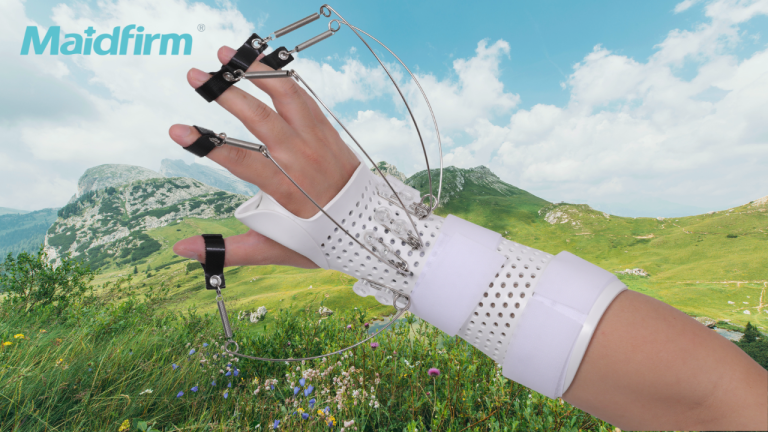
We take the classic dynamic wrist extension splint for finger extension following radial nerve injury, commonly used in hand surgery, to demonstrate the clinical workflow for therapists:
1. Build the Foundation: Construct the Static Base
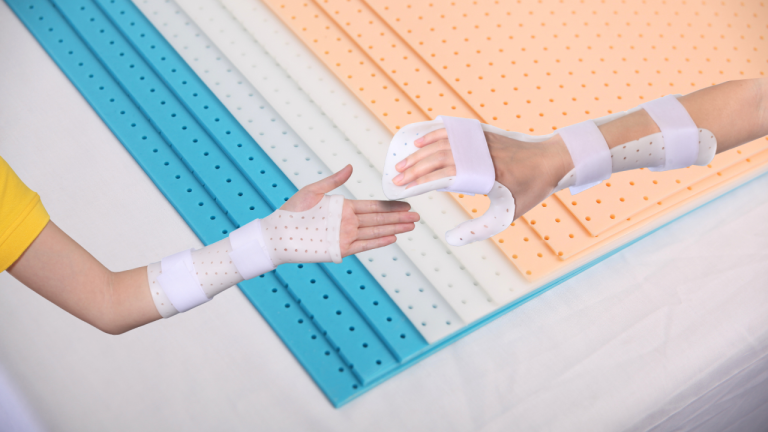
Material Selection: The base bears tension from the entire traction system. 3.2mm thick maidfirm low-temperature thermoplastic sheets are recommended.
Moulding: Shape the static base covering the forearm to the palmar crease. Position the wrist in a functional posture of 20°–30° dorsiflexion and reserve adequate space for finger movement.
2. Construct the Outrigger
Structure: After the base hardens, use a heat gun for localised heating on its dorsal surface. Leverage the high adhesive property of heated thermoplastic material to firmly attach pre-shaped metal arches or rigid thermoplastic strips onto the base, extending above the fingers.
3. Secure Accessories by Utilising Thermoplastic Adhesion When Heated
As mentioned above, softened thermoplastic material achieves molecular bonding upon contact.
Accessory Fixation: Therapists can overheat scrap thermoplastic patches with a heat gun to embed and fusion-weld resistance band hooks, pulleys or hook-and-loop fastener rings onto designated force-bearing points of the base. This integrated structural design ensures attachments remain intact even after tens of thousands of elastic traction cycles.
4. Attach Elastic Resistance Components
Adjustment: Fabricate precision finger cuffs (1.6mm ultra-thin sheets recommended to reduce distal finger load). Connect finger cuffs to the outrigger via latex tubes or springs. Adjust spring tension to just assist finger extension while allowing patients to actively flex fingers for grasping training.
III. Material Handling Tips for Physiotherapists: Why Choose maidfirm Thermoplastic Sheets?
During repeated functional movement inside dynamic splints, the physical properties of materials directly determine rehabilitation outcomes.
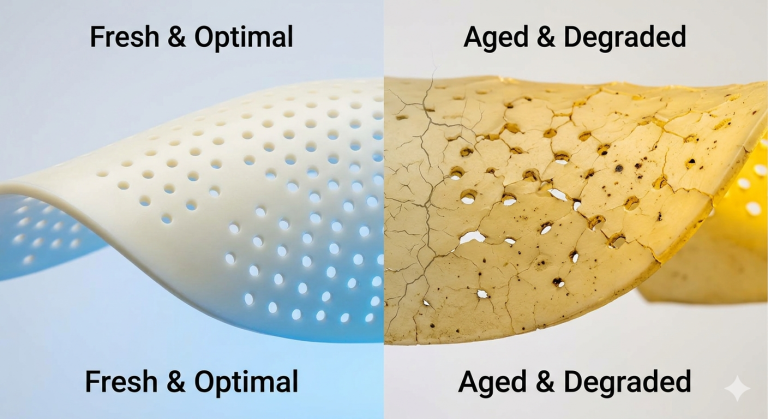
Fatigue Resistance & Rigid Support: Dynamic splints endure alternating cyclic loads during use. Through block copolymer modification technology, maidfirm greatly improves the fatigue resistance of thermoplastic sheets. This prevents structural creep or local fatigue cracking of the base during repeated finger flexion and extension against spring tension.
Reliable Shape Memory & Adjustability: As patients gain improved joint ROM, therapists need to fine-tune traction angles or base positioning weekly. maidfirm materials support repeated heating and partial reshaping, allowing therapists to modify the existing splint directly instead of frequently replacing sheets, which significantly lowers patients’ rehabilitation costs.
Perfect Combination of 1.6mm and 3.2mm Sheets: maidfirm provides a complete thickness range. Therapists can adopt 3.2mm sheets for rigid forearm bases and 1.6mm ultra-thin sheets for finger cuffs, achieving an optimal balance of strength and flexibility within the dynamic system.
IV. Clinical Wearing Protocol & Monitoring from a Therapist’s Viewpoint
Intermittent Wearing Principle: Dynamic splints are not intended for all-day immobilisation. Normally, patients wear them during active rehabilitation training in daytime (e.g., wear for 2 hours, then remove for 15 minutes of active relaxation). Switch to static splints during sleep to avoid muscular fatigue caused by over-traction.
Anti-Slip & Skin Protection: Continuous centripetal or centrifugal force generated by dynamic splints may cause splint displacement on limbs. Therapists should adopt a scientific reverse cross-tension layout for hook-and-loop straps, strengthen fixation at narrow areas such as the wrist prone to slippage, and ensure dry, breathable lining inside the splint.
V. Conclusion: Enable Mobility Through Immobilisation, Restore Lost Function
The shift from passive restriction via static immobilisation to active movement guidance with dynamic functional splints marks an important conceptual evolution in rehabilitation medicine, moving from passive protection to active tissue remodelling. maidfirm strives to upgrade material modification technologies, equipping physiotherapists and occupational therapists with durable, easy-to-handle “biomechanical tools” to reconstruct free movement for patients with impaired motor chains.