The Impact of Perforation Rate of Radiotherapy Immobilization Masks on Immobilization Performance
1. Basic Concepts of Radiotherapy Immobilization Masks and Perforation Rate
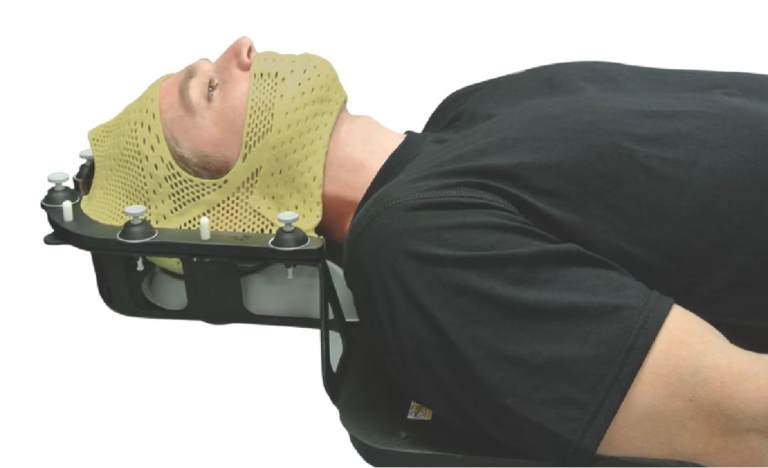
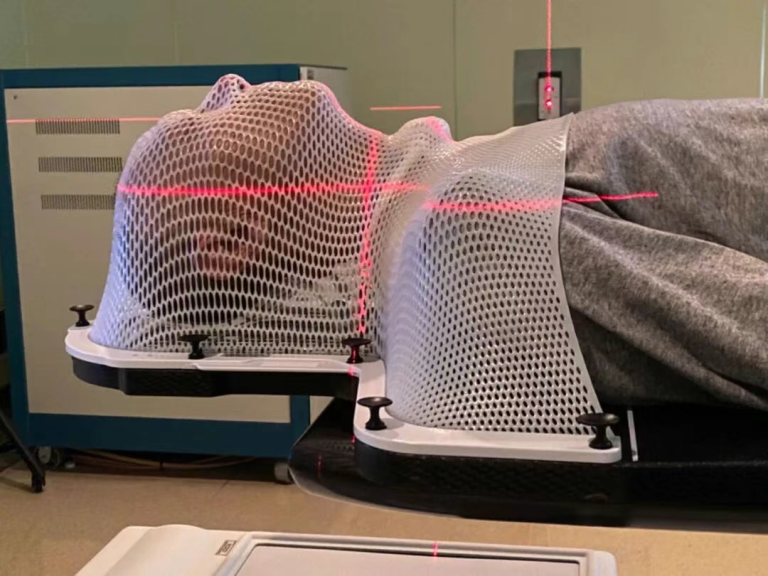
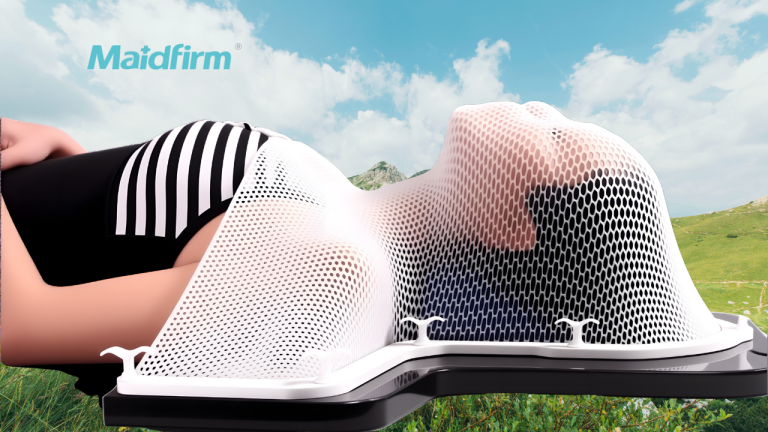
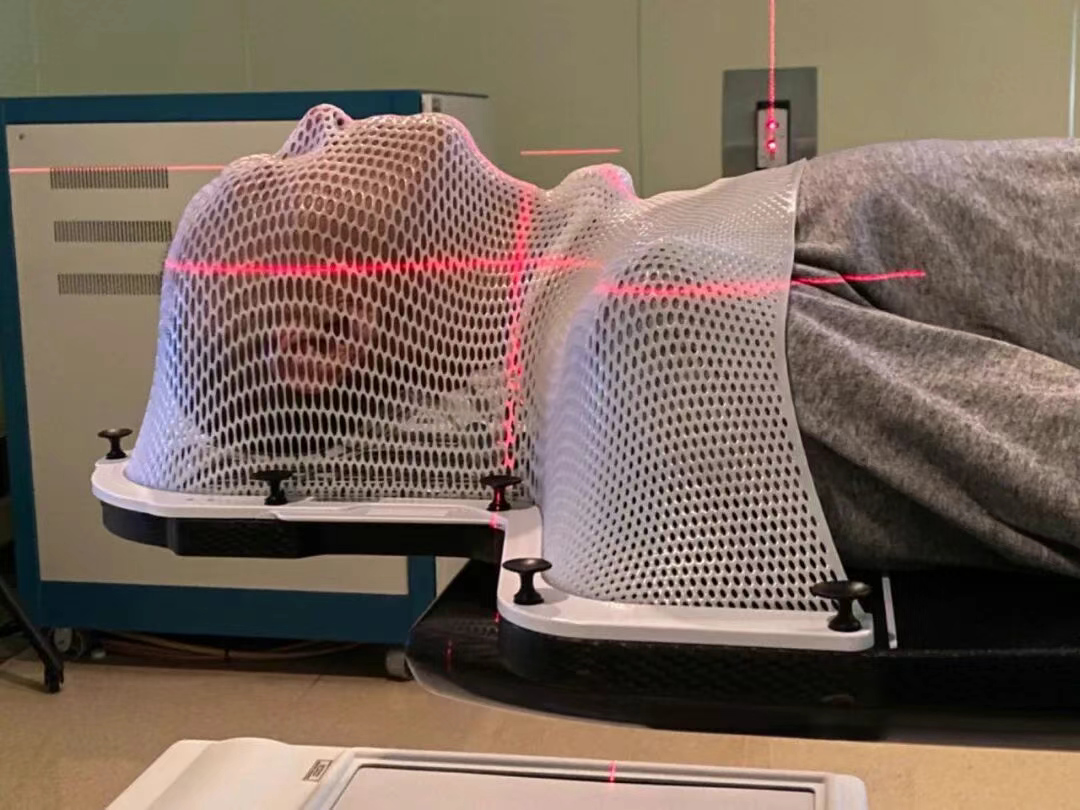
Radiotherapy immobilization masks are thermoplastic materials commonly used for patient positioning and immobilization in radiotherapy workflows. In clinical application, the mask sheet is heated until softened, then applied closely to the patient’s body surface. After cooling, it forms a custom‑fitted shell matching the patient’s anatomical contour, enabling consistent patient positioning across multiple radiation treatment fractions. The perforation rate refers to the ratio of total hole area to the overall surface area of the mask sheet. Perforation rates vary across commercially available products. Manufacturers provide a range of specifications for radiotherapy departments to select according to clinical requirements.
2. Why Perforation Rate Affects Immobilization Performance
2.1 Bonding Strength and Mechanical Properties
After heating, the mask needs to be appropriately stretched and pressed to conform to complex contours such as the forehead, mandible, shoulder and abdomen. Holes reduce the continuous solid material area of the sheet. Given identical base material and thickness, higher perforation rates leave less solid material to bear tensile loads, which may compromise the overall rigidity after forming. Particularly for high‑precision head and head‑and‑neck radiotherapy, excessively high perforation rates carry risks of insufficient holding force and marginal loosening after cooling. For regions with sharp anatomical curvature, clinicians should assess susceptibility to local fracture or spring‑back according to practical handling characteristics.
2.2 Breathability and Skin Tolerance
Radiotherapy patients typically receive treatment over multiple fractions. Each session requires the patient to maintain a static posture during positioning and beam delivery. Non‑perforated masks impede heat dissipation and sweat evaporation against the skin, potentially causing discomfort from heat and moisture. Masks with higher perforation rates improve air circulation and alleviate patient discomfort during prolonged immobilization. Moderately increased perforation rates also facilitate skin inspection for patients with radiotherapy‑induced cutaneous reactions or thin skin. Nevertheless, breathability is only one selection criterion; structural rigidity for reliable immobilization should not be sacrificed merely for enhanced ventilation.
2.3 Surface Marking and Visual Inspection
Surface reference marks are frequently drawn either directly on the mask or aligned with skin landmarks. Perforations expose skin areas, improving visualization of body contours and skin markers for technologists. However, interspersed holes may complicate continuous mark drawing. Reference lines crossing hole edges risk discontinuity and positional deviation; technologists must select appropriate mark positions considering hole distribution. For some image‑guided verification workflows performed with the mask in‑situ, perforations marginally reduce beam attenuation, though this is rarely the decisive factor for mask selection.
2.4 Behaviour During Heating and Moulding
Masks with different perforation rates exhibit distinct ductility, sagging characteristics and handling feel when heated. High‑perforation masks become softer upon heating and are prone to excessive thinning during moulding, requiring gentler manipulation. Low‑perforation masks maintain better structural integrity and superior contour retention after cooling. Sheet weight also varies at equal dimensions with differing perforation rates. Accordingly, immobilization performance cannot be evaluated by perforation rate alone; thickness, hole diameter, hole spacing and operational techniques must all be taken into account.
3. Common Clinical Considerations Regarding Mask Perforation Rate
- Match specifications to anatomical site and positional accuracy requirements: Head and head‑and‑neck radiotherapy demand high reproducibility of setup, prioritizing post‑moulding rigidity. For thoracic, abdominal or superficial tumour immobilization, balance mask weight, contact area and patient tolerance; avoid rigid application of a single perforation specification across all sites.
- Limitations of low‑perforation masks: Low‑perforation masks deliver superior rigidity at the cost of reduced breathability. During multi‑fraction courses, prolonged skin contact with dense mask material increases sweating and dampness. Immobilization advantages of low‑perforation designs diminish if masks are repeatedly opened between fractions.
- Risks of over‑reliance on high‑perforation masks: High‑perforation variants offer light weight and ventilation yet may degrade post‑cooling fixation strength. For patients with thick subcutaneous tissue or high body movement potential, verify adequate restraining capacity. For patients with poor cooperation, immobilization reliability outweighs comfort priorities.
- Evaluate perforation rate together with sheet thickness: maidfirm supplies radiotherapy immobilization masks with thickness ranging from 1.6 mm to 4.0 mm and perforation rates spanning 0 %‑42 %. At identical perforation rates, thickness alters mechanical strength and ventilation performance. For instance, a 2.0 mm mask with high perforation exhibits different functional behaviour compared with a 3.0 mm mask with low perforation. Confirm full technical specifications with manufacturers at procurement.
- Verify medical device registration and intended use: Radiotherapy immobilization masks are classified as medical devices. Always review registration documentation and official instructions for intended application scope. maidfirm’s immobilization masks are registered for “patient positioning and immobilization during radiotherapy”. Devices must be strictly used within their approved indications.
- Conduct pre‑clinical moulding trials: Prior to full‑scale adoption, radiotherapy departments should test sample masks under standard water temperature and heating protocols. Assess stretch behaviour, cooling time and marginal conformity. Pure parameter comparison without hands‑on testing cannot confirm suitability for local clinical workflows.
4. Perforation Rate and Immobilization Performance: No Simple Linear Relationship
Intuitively, higher perforation improves breathability, while lower perforation preserves structural continuity. However, overall immobilization performance is not determined by perforation rate in isolation. Influencing variables include patient anatomy, heating temperature, operator technique, baseplate systems, patient compliance and treatment course duration. For a patient with prominent facial bony anatomy, high‑perforation masks demand meticulous moulding to prevent voids over bony prominences. Conversely, moderately low perforation does not guarantee secure fixation if mask‑to‑skin contact is insufficient. Clinical teams must validate positional stability through practical simulation rather than relying on oversimplified assumptions such as “higher perforation equals worse immobilization”.
5. Specification Selection and Consultation Recommendations
For procurement teams and radiotherapy departments, define local clinical requirements including frequently‑treated anatomical sites, positioning baseplate systems, mask consumption volume and typical immobilization duration before engaging manufacturers. maidfirm offers multiple immobilization mask variants, with registered dimensions ranging from 50 × 50 mm up to 600 × 900 mm, thickness 1.6 mm‑4.0 mm and perforation rates from 0 %‑42 %. Different specifications are optimized for neck, chest, abdomen and extremity applications. Request official instructions and physical samples for department‑level evaluation of perforation rate, thickness and handling properties to prevent batch‑level mismatches and material waste.
Perforation rate exerts measurable influence on immobilization mask performance yet remains only one contributing factor. Manufacturing processes, polymer formulation and recommended heating protocols differ across suppliers. Procure CE/NMPA‑registered medical devices from qualified suppliers and accumulate practical operating experience to maximize clinical performance of radiotherapy immobilization masks.