Low-Temperature Thermoplastic Sheets vs Plaster Casts: Full Clinical Comparison
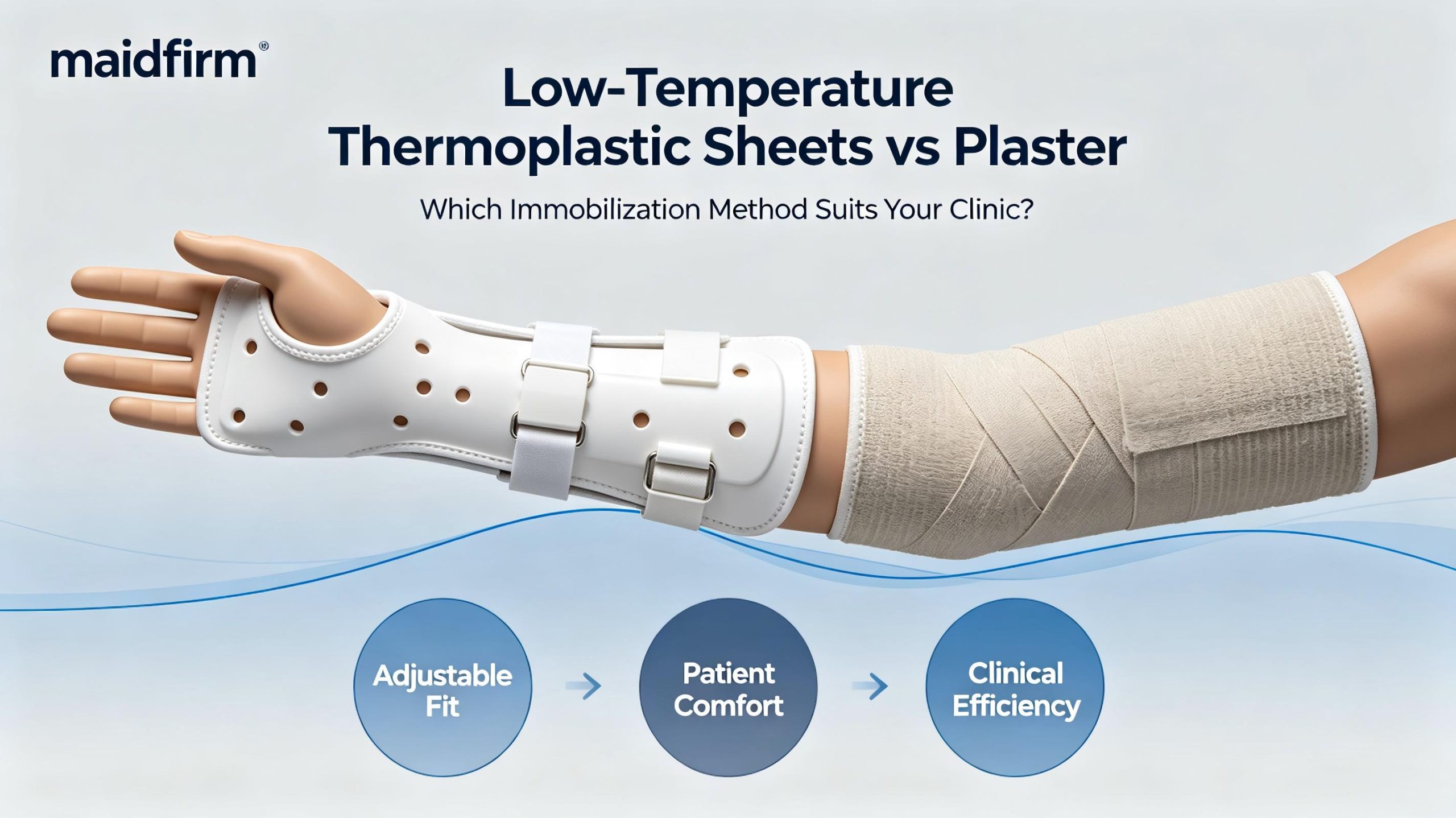
Orthopedic external fixation plays a vital role in fracture recovery, post-surgical immobilization, and rehabilitation treatment. Clinicians mainly choose between two mainstream solutions: traditional plaster casts and modern low-temperature thermoplastic sheets. For clinics looking to improve patient experience, reduce follow-up costs, and enhance treatment precision, understanding the differences between thermoplastic braces and plaster immobilization is essential. This article presents a complete clinical comparison of maidfirm low-temperature thermoplastic sheets and conventional plaster casts in terms of material properties, operation workflow, wearing comfort, radiographic performance, and overall clinical value.
1. Basic Material Properties
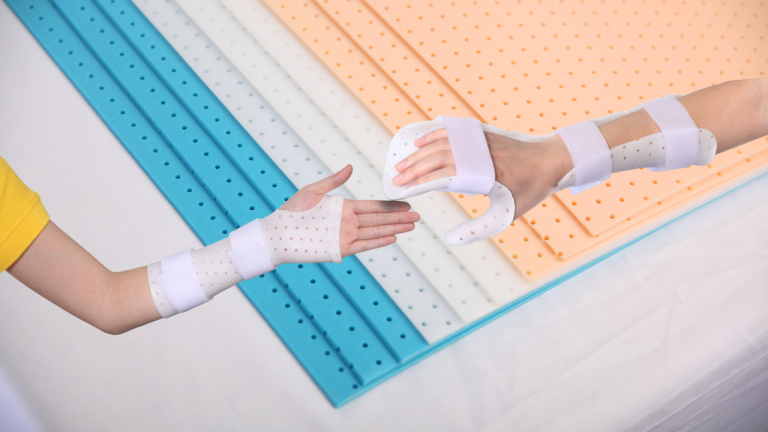
Low-temperature thermoplastic sheet is a high-molecular polyester polymer material with stable physical performance under dry room temperatures (10°C–30°C). When heated in constant-temperature water at 65°C–70°C for 1–3 minutes, the material softens and becomes fully moldable. After contouring, it hardens and locks shape within 3–5 minutes at room temperature. This reversible softening and hardening characteristic makes thermoplastic sheets ideal for customized orthopedic bracing and rehabilitation splinting.
Traditional medical plaster casts harden rapidly after water immersion through crystallization. Their curing speed is easily affected by water temperature, humidity, and plaster quality. Although plaster materials are low in unit cost, they harden irreversibly and cannot be adjusted or reshaped after curing.
2. Clinical Operation Workflow Comparison
Plaster Cast Procedure
Plaster immobilization requires padding wrapping, repeated bandage winding, and manual shaping during the exothermic hardening process. The full procedure takes 5–15 minutes. Once hardened, plaster cannot be fine-tuned. Any swelling changes or poor fitting requires complete removal and re-casting, increasing clinical labor costs and patient waiting time.
Thermoplastic Sheet Procedure (maidfirm)
The thermoplastic fabrication process is simpler and more efficient. Clinicians cut the sheet to size, heat it in 65°C–70°C water for 1–3 minutes, mold it directly to the limb anatomy, and fix it with fasteners. The brace fully hardens within 3–5 minutes. The most significant advantage is repeated reheating and fine adjustment. If the initial fitting is imperfect or limb swelling changes during recovery, clinicians can re-soften and modify the brace without replacing the entire device.
3. Wearing Experience & Daily Patient Care
Lightweight Design
maidfirm thermoplastic sheets feature low density and thin-profile structure. Under the same coverage area, thermoplastic braces are significantly lighter than bulky plaster casts, reducing limb fatigue during long-term immobilization.
Breathability & Hygiene
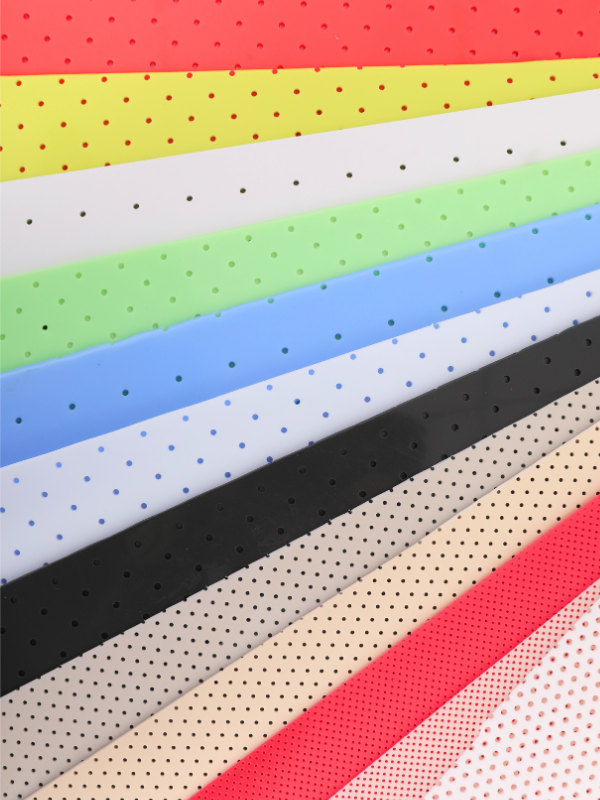
Custom perforation design improves air circulation and sweat evaporation, effectively avoiding skin maceration, itching, and odor caused by fully enclosed fixation. In contrast, plaster casts completely seal the skin, trap moisture, and often cause skin irritation after days of continuous wear.
Removable & Adjustable
Thermoplastic braces adopt hook-and-loop or buckle fixation, allowing easy removal for skin cleaning, wound inspection, and physical therapy training. Plaster casts require professional saw cutting for removal and cannot be reused. The detachable design greatly improves daily nursing convenience and rehabilitation flexibility.
4. Clinical Performance & Technical Advantages
Fixation Strength & Stability
Plaster provides high rigidity for strict immobilization in acute fracture stages. maidfirm thermoplastic sheets deliver balanced support strength based on different thickness specifications (1.6mm–4.0mm). Suitable sheet thickness can provide reliable fixation while maintaining appropriate flexibility for functional rehabilitation.
Precise Anatomical Fitting
Softened thermoplastic material fits limb contours perfectly and allows edge trimming to eliminate local pressure points. It is more suitable for joint fixation and personalized orthopedic correction compared with plaster, which relies heavily on operator experience and padding uniformity.
X-Ray Radiolucency
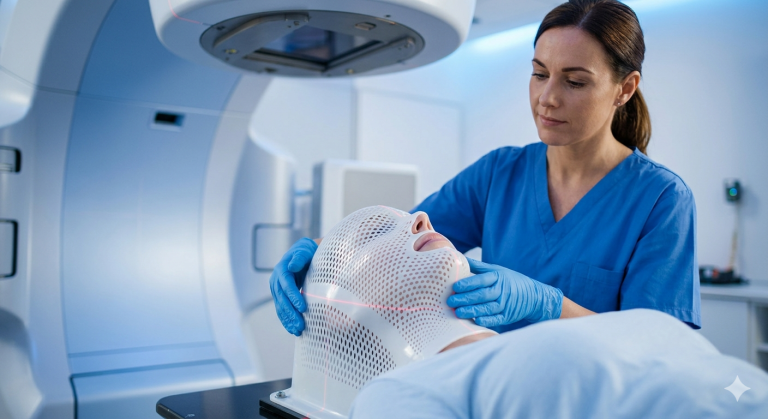
maidfirm low-temperature thermoplastic sheets offer excellent X-ray permeability. Clinicians can observe fracture alignment and bone callus growth during follow-up imaging without removing the brace or increasing radiation exposure. Plaster casts interfere with imaging quality and often require cast removal for clear examination.
Water Resistance & Durability
Thermoplastic material surface is smooth, water-resistant, and easy to clean. Plaster quickly loses structural strength when dampened and requires strict waterproof protection. Although thermoplastic braces are water-tolerant, prolonged soaking is not recommended to keep internal padding dry.
5. Cost Analysis & Clinical Value
Although the unit material cost of thermoplastic sheets is higher than plaster, the overall clinical cost is more economical in the long run. Reusable adjustment, reduced replacement frequency, fewer revision visits, and improved patient compliance effectively lower comprehensive treatment costs for rehabilitation departments.
6. Recommended Clinical Selection Scenarios
Choose maidfirm thermoplastic sheets for:
- Long-term rehabilitation immobilization requiring frequent skin observation
- Fracture recovery stages with dynamic swelling changes
- Pediatric, elderly, and sensitive-skin patients
- Functional training requiring removable braces
- Cases needing repeated imaging review
Choose traditional plaster for:
- Acute severe fractures requiring ultra-rigid immobilization
- Short-term simple fixation with cost-sensitive treatment plans
7. Conclusion
Traditional plaster casts remain a cost-effective solution for acute rigid fixation, while maidfirm low-temperature thermoplastic sheets represent an upgraded modern orthopedic fixation solution. With lightweight design, breathable structure, X-ray transparency, repeatable adjustment, and superior patient comfort, thermoplastic braces significantly improve clinical efficiency, rehabilitation outcomes, and patient satisfaction. For modern orthopedic and rehabilitation clinics, thermoplastic material has become the preferred choice for personalized, functional, and high-quality external fixation.