Choose It, and Fracture Rehabilitation Becomes Easier
Abstract:
According to a study published in The Lancet Healthy Longevity, in 2019, the global number of people with fractures reached approximately 455 million, a 70.1% increase from 1990. The number of new fracture cases was about 178 million, a 33.4% increase from 1990.
Post-Fracture Rehabilitation:
Most treatments opt for “orthopedic external fixation,” which maintains the fractured bone in a reduced position to achieve solid healing with good alignment. This approach offers the following benefits:
- Maintaining Correct Position: After reduction, muscles, limb weight, or other human factors can cause displacement again. Fixation is necessary to prevent this.
- Ensuring Normal Bone Healing: Normal bone healing relies on intramembranous ossification (via periosteum/endosteum) and endochondral ossification (at the fracture site). Shear, rotational, and angular stresses at the fracture ends can interfere with these processes. Fixation is essential to ensure normal healing and prevent malunion or nonunion.
- Enabling Early Muscle and Joint Activity: Without fixation, limb movement is often difficult, leading to muscle atrophy and joint stiffness. Effective fixation, combined with reasonable movement, creates relative stability at the fracture site, allowing for muscle and joint exercise.
- Alleviating Other Symptoms: External fixation can also relieve pain, reduce muscle spasms, and prevent secondary injuries from re-displacement.
Choosing External Fixation Materials:
The choice of external fixation material is crucial for patients, as the right material can shorten recovery time and reduce suffering. Common materials include plaster bandages, splints (traditional wooden/novel boards), and external fixators (which penetrate the skin), each with distinct characteristics.
Comparison of Common Materials:
- Plaster Bandage:
- Advantages:Can be molded to the limb’s shape, provides reliable and durable fixation.
- Disadvantages:Non-elastic, cannot be adjusted for tightness, requires immobilization of joints above and below the fracture, hinders functional exercise, and can cause joint stiffness.
- Splint:
- Advantages:Reliable fixation, promotes faster fracture healing, good functional recovery, low cost, fewer complications.
- Disadvantages:If too loose or with improperly placed pads, re-displacement may occur. If too tight, it can cause pressure ulcers, ischemic muscle contracture, or even limb gangrene.
- External Fixator:
- Advantages:Reliable fixation, easy wound management, does not restrict joint movement, allows for early functional exercise.
- Disadvantages:Affects appearance and is prone to accidental contact, causing local wound pain.
Focus on Plaster vs. Low-Temperature Thermoplastic Splints:
Plaster, a traditional material, falls short in performance and environmental friendliness. Its production generates significant dust, conflicting with environmental policies. Additionally, plaster is non-breathable and cumbersome, hindering post-fracture recovery.
In contrast, low-temperature thermoplastic splints, now a mature technology, offer several advantages over traditional plaster:
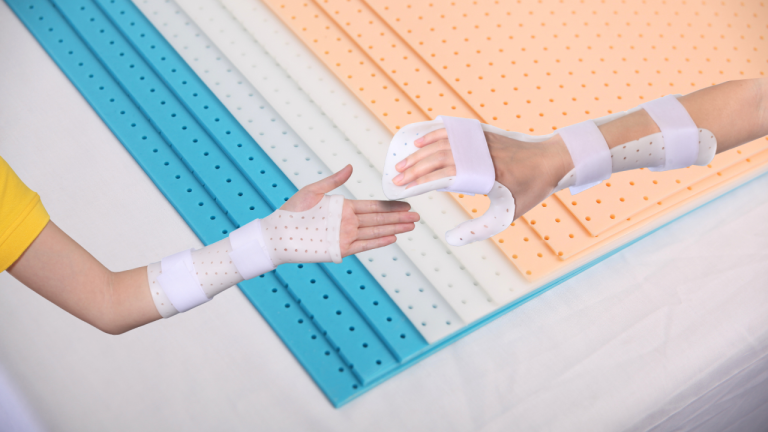
- Lightweight and Non-Allergenic: Made from polymer polyesters processed through physical and chemical methods, it contains no latex. With a thickness of 1.6-4.0mm, it weighs only 1/4 to 1/3 of plaster.
- Excellent Moldability and High Strength: The material softens and becomes transparent in 65-70°C water, allowing easy stretching and shaping. If the initial mold is unsatisfactory, it can be re-softened in hot water to return to its original size and shape for re-molding. It is highly resilient, resistant to breakage, and safe. In contrast, plaster bandages typically require 24 hours to harden and bear weight.
- X-Ray Permeable: It is 100% permeable to X-rays, not affecting or weakening X-ray imaging. Plaster casts, however, often produce blurry X-ray images, sometimes necessitating cast removal for clear imaging.
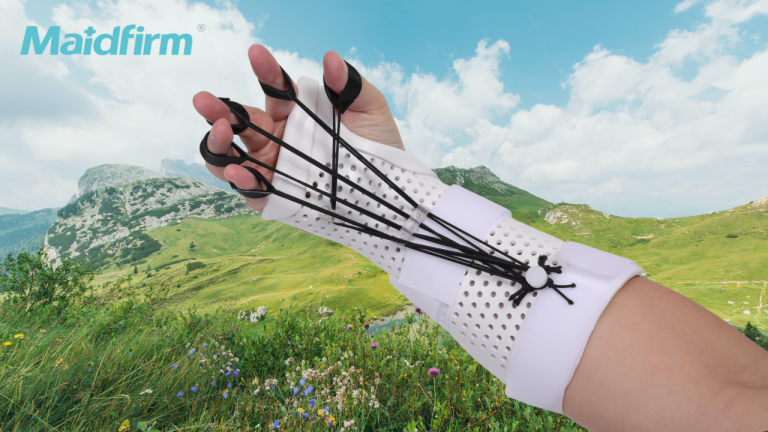
- Breathable and Comfortable: Its unique mesh design enhances skin ventilation, heat dissipation, and perspiration, preventing redness and itching. It is also waterproof, allowing patients to bathe, thereby improving their quality of life.
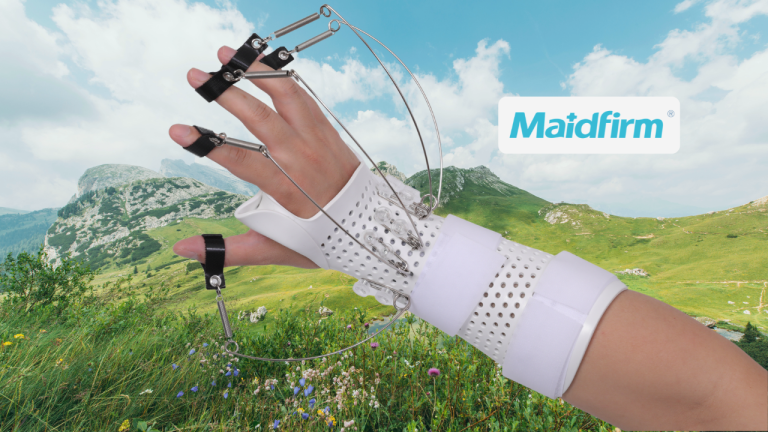
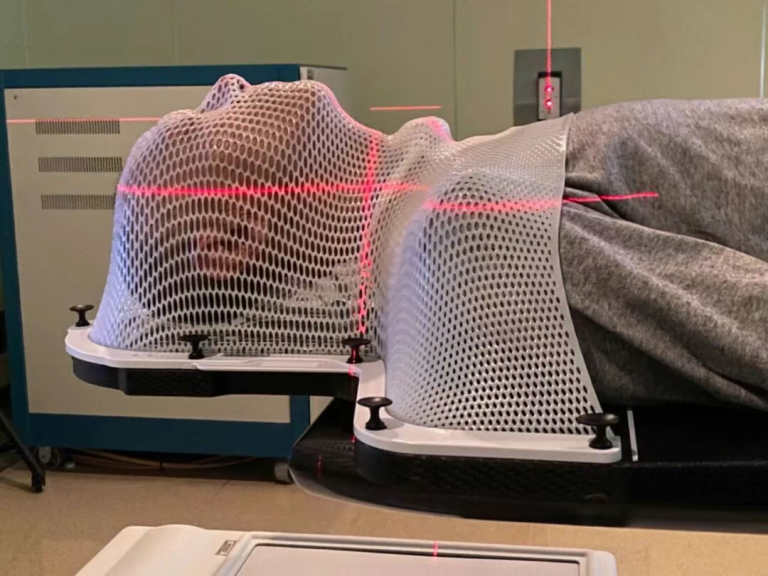
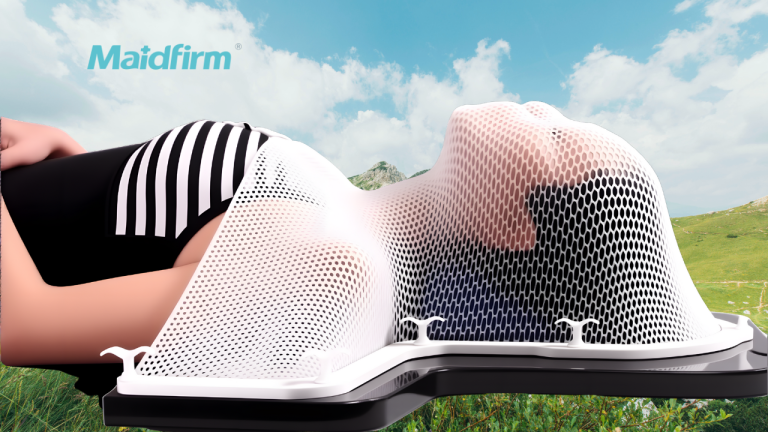
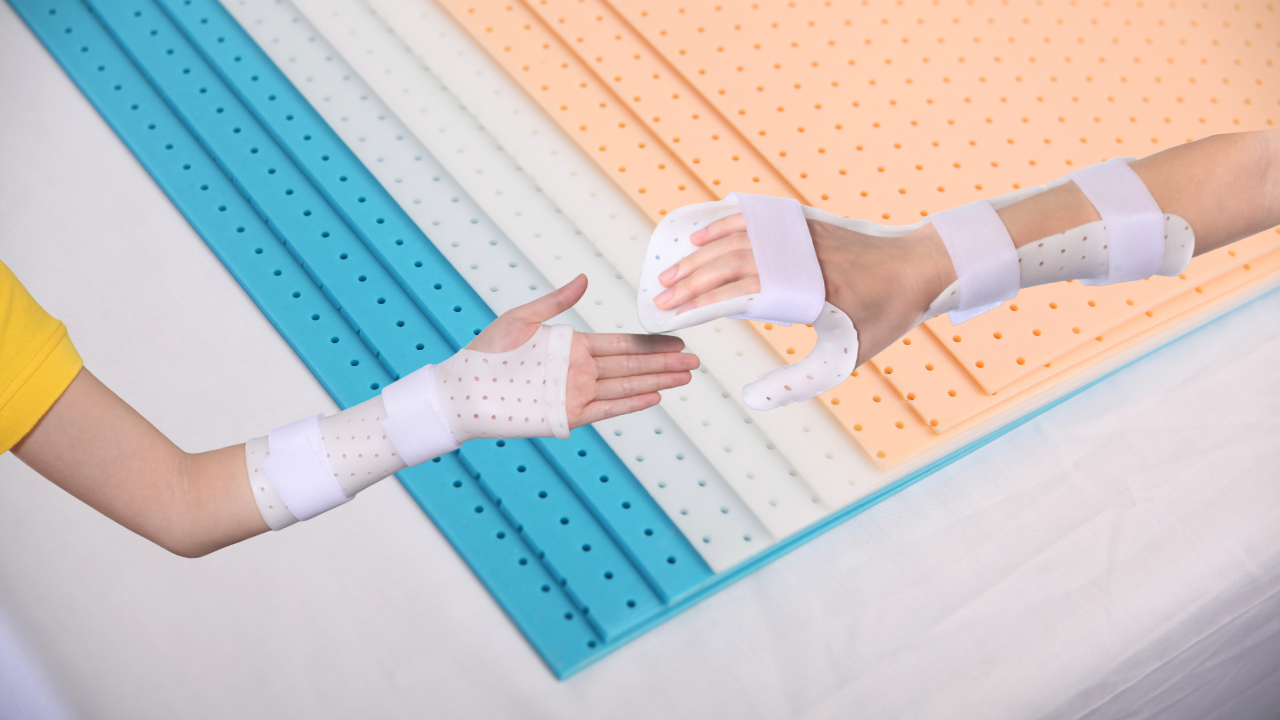
Low-temperature thermoplastic splints are categorized into sheet and pre-fabricated types (customizable). They are suitable for various body parts, including fingers, wrists, elbows, arms, shoulders, head, neck, torso, knees, ankles, feet, and legs. Different thicknesses (1.6mm, 2.0mm, 2.4mm, 3.2mm, 4.0mm) and pore sizes (1.0mm, 2.0mm, 2.4mm, 3.2mm) are available based on the application area, user’s age, body type, and specific requirements.
Instructions for Use:
- Place paper closely against the area to be molded and trace its outline.
- Cut the required shape from the splint material, ensuring smooth curves.
- Place the cut piece in a water bath at 65-70°C for 2-3 minutes.
- Remove the material and blot dry with a towel.
- Gently apply the material to the area without stretching, to avoid thinning and weakening it.
- Allow it to cool until it turns white, indicating basic setting is complete, then secure with the hook-and-loop fastener straps.