Exploring the Optimal Softening Temperature of Medical Thermoplastic Sheets:Why 65°C–70°C?
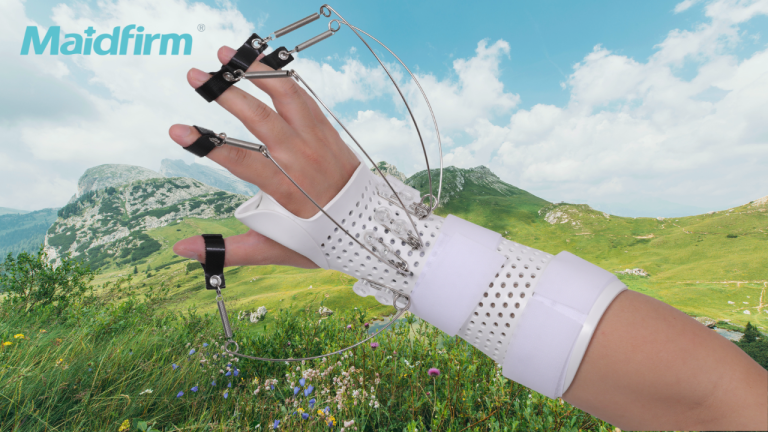
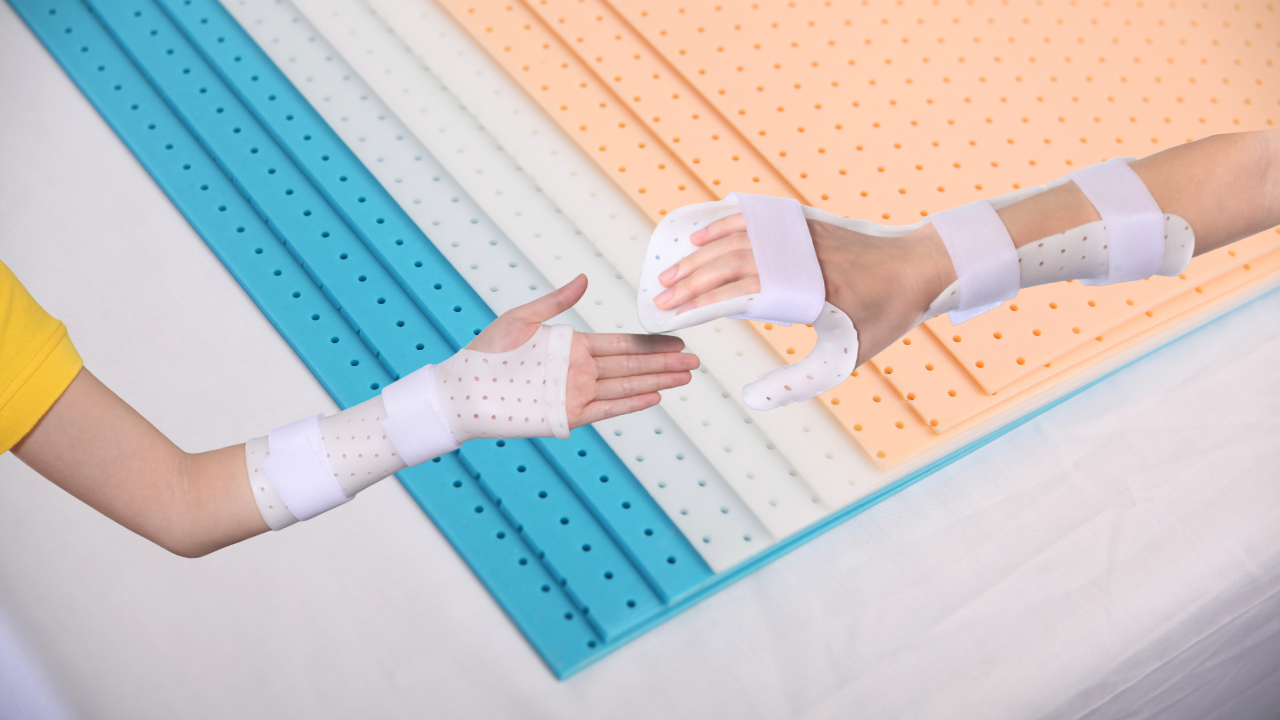
During orthopedic reduction, hand surgery immobilization, or orthotic fabrication in rehabilitation departments, the first step for clinicians working with low-temperature thermoplastic sheets is to submerge the material in a thermostatic water bath maintained at 65°C–70°C. After roughly one minute, the rigid sheet turns transparent, softens like dough, and becomes highly moldable.
Have you ever wondered: Why not 50°C? Why not 80°C? What makes 65°C–70°C the global “gold standard” for medical low-temperature thermoplastic sheets?
As a professional developer of medical polymer materials, the technical team at maidfirm will now uncover the scientific principles behind this temperature threshold from the perspective of polymer physics.
I. The End of Crystal Melting: Physical Limits of Polycaprolactone (PCL)
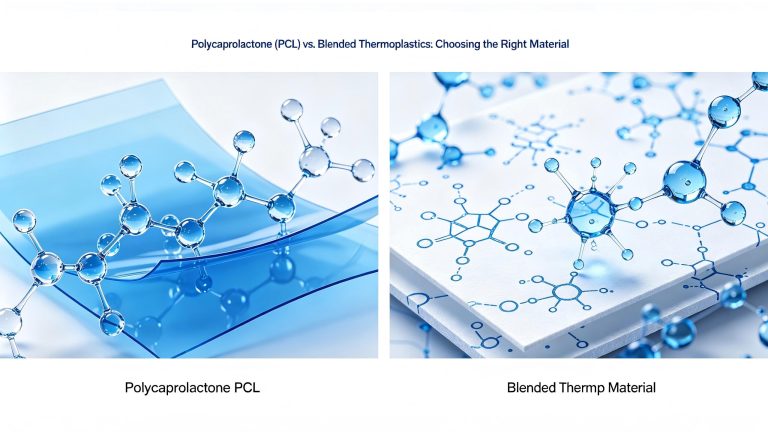
The core component of medical low-temperature thermoplastic sheets is modified polycaprolactone (PCL).
Melting Point (Tₘ) Boundary: Pure polycaprolactone has a crystalline melting point of approximately 60°C. When the ambient temperature falls below 60°C, polymer chains inside the material remain firmly locked within crystal lattices, resulting in high rigidity.
Why an additional 5°C–10°C is required: Although melting initiates at 60°C, a water temperature of 65°C–70°C is necessary to achieve full and uniform melting across all crystalline regions inside the sheet. Only at this temperature can polymer chains slide freely and stretch smoothly. Temperatures below this range leave unmelted crystalline cores within the material, causing uneven stretching and tearing during molding.
II. Upper Limit of Human Tolerance: A Safety Valve for Patient Skin
The core principle of medical devices is Primum non nocere – first, do no harm. Thermoplastic sheets are molded while directly contacting the patient’s skin, so temperature control must account for human physiological heat tolerance.
Balance of Heat Capacity and Heat Dissipation: While the water reaches 65°C–70°C, water evaporates rapidly from the sheet surface once removed from the bath. In addition, the thermal conductivity of this polymer is far lower than metal and water.
Golden Operating Window: After removing the sheet and drying its surface with a towel, its temperature quickly drops to roughly 40°C–45°C. This temperature keeps polymer chains molten and flexible while remaining comfortably tolerable to human skin, eliminating burn risks entirely.
What happens if the temperature rises to 80°C?
The sheet retains excessive base temperature after removal from the water bath, easily causing first-degree or second-degree burns when applied to limbs. Moreover, overheating turns the material into an uncontrollable viscous mass, eliminating its shape-retention capability.
III. The Craft of Operating Time: 3–5 Minutes of Clinical Tolerance
An initial heating temperature of 65°C–70°C perfectly defines the material’s air-cooling operating window:
[65°C–70°C Water Bath] ➔ [Removed & Dried, ~45°C] ➔ [Precise Clinical Molding: 3–5 Minutes] ➔ [Hardens and locks shape when cooled to body temperature]
When heated within this temperature range, maidfirm sheets offer clinicians a 3–5 minute golden operating period. Within this window, the material maintains excellent shape memory and ductility, enabling fine adjustments to joint angles. As the temperature gradually falls toward body temperature, the material rapidly recrystallizes and permanently locks into its molded form.
IV. Technical Insight: How maidfirm Achieves Precise Temperature Responsiveness
As a material manufacturer, simply knowing the 65°C–70°C range is insufficient. The key challenge is optimizing material performance within this temperature band. Through sophisticated synthetic processes, maidfirm has achieved the following breakthroughs:
Narrow Molecular Weight Distribution: Conventional industrial-grade PCL features inconsistent molecular weights, creating an excessively broad melting range (some soften at 55°C, while others remain rigid at 75°C). maidfirm adopts medical-grade narrow-distribution modification technology. The sheets turn uniformly transparent exactly at 65°C without surface stickiness or sagging.
Superior Shape Memory: Once fully softened at 65°C–70°C, sheets can be re-submerged in water at the same temperature to recover their original flat form if molding results are unsatisfactory, delivering outstanding fault tolerance for clinical practice.
V. Conclusion
65°C–70°C is not an arbitrary value. It represents the optimal solution forged by the intersection of polymer material science and clinical medicine. It respects the laws governing polymer crystal melting while embodying humanistic care to protect patients’ skin safety. maidfirm conducts in-depth research on every degree of temperature difference, ensuring every orthopedic immobilization procedure is stable, safe and efficient.
During orthopedic reduction, hand surgery immobilization, or orthotic fabrication in rehabilitation departments, the first step for clinicians working with low-temperature thermoplastic sheets is to submerge the material in a thermostatic water bath maintained at 65°C–70°C. After roughly one minute, the rigid sheet turns transparent, softens like dough, and becomes highly moldable.
Have you ever wondered: Why not 50°C? Why not 80°C? What makes 65°C–70°C the global “gold standard” for medical low-temperature thermoplastic sheets?
As a professional developer of medical polymer materials, the technical team at maidfirm will now uncover the scientific principles behind this temperature threshold from the perspective of polymer physics.
I. The End of Crystal Melting: Physical Limits of Polycaprolactone (PCL)
The core component of medical low-temperature thermoplastic sheets is modified polycaprolactone (PCL).
Melting Point (Tₘ) Boundary: Pure polycaprolactone has a crystalline melting point of approximately 60°C. When the ambient temperature falls below 60°C, polymer chains inside the material remain firmly locked within crystal lattices, resulting in high rigidity.
Why an additional 5°C–10°C is required: Although melting initiates at 60°C, a water temperature of 65°C–70°C is necessary to achieve full and uniform melting across all crystalline regions inside the sheet. Only at this temperature can polymer chains slide freely and stretch smoothly. Temperatures below this range leave unmelted crystalline cores within the material, causing uneven stretching and tearing during molding.
II. Upper Limit of Human Tolerance: A Safety Valve for Patient Skin
The core principle of medical devices is Primum non nocere – first, do no harm. Thermoplastic sheets are molded while directly contacting the patient’s skin, so temperature control must account for human physiological heat tolerance.
Balance of Heat Capacity and Heat Dissipation: While the water reaches 65°C–70°C, water evaporates rapidly from the sheet surface once removed from the bath. In addition, the thermal conductivity of this polymer is far lower than metal and water.
Golden Operating Window: After removing the sheet and drying its surface with a towel, its temperature quickly drops to roughly 40°C–45°C. This temperature keeps polymer chains molten and flexible while remaining comfortably tolerable to human skin, eliminating burn risks entirely.
What happens if the temperature rises to 80°C?
The sheet retains excessive base temperature after removal from the water bath, easily causing first-degree or second-degree burns when applied to limbs. Moreover, overheating turns the material into an uncontrollable viscous mass, eliminating its shape-retention capability.
III. The Craft of Operating Time: 3–5 Minutes of Clinical Tolerance
An initial heating temperature of 65°C–70°C perfectly defines the material’s air-cooling operating window:
[65°C–70°C Water Bath] ➔ [Removed & Dried, ~45°C] ➔ [Precise Clinical Molding: 3–5 Minutes] ➔ [Hardens and locks shape when cooled to body temperature]
When heated within this temperature range, maidfirm sheets offer clinicians a 3–5 minute golden operating period. Within this window, the material maintains excellent shape memory and ductility, enabling fine adjustments to joint angles. As the temperature gradually falls toward body temperature, the material rapidly recrystallizes and permanently locks into its molded form.
IV. Technical Insight: How maidfirm Achieves Precise Temperature Responsiveness
As a material manufacturer, simply knowing the 65°C–70°C range is insufficient. The key challenge is optimizing material performance within this temperature band. Through sophisticated synthetic processes, maidfirm has achieved the following breakthroughs:
Narrow Molecular Weight Distribution: Conventional industrial-grade PCL features inconsistent molecular weights, creating an excessively broad melting range (some soften at 55°C, while others remain rigid at 75°C). maidfirm adopts medical-grade narrow-distribution modification technology. The sheets turn uniformly transparent exactly at 65°C without surface stickiness or sagging.
Superior Shape Memory: Once fully softened at 65°C–70°C, sheets can be re-submerged in water at the same temperature to recover their original flat form if molding results are unsatisfactory, delivering outstanding fault tolerance for clinical practice.
V. Conclusion
65°C–70°C is not an arbitrary value. It represents the optimal solution forged by the intersection of polymer material science and clinical medicine. It respects the laws governing polymer crystal melting while embodying humanistic care to protect patients’ skin safety. maidfirm conducts in-depth research on every degree of temperature difference, ensuring every orthopedic immobilization procedure is stable, safe and efficient.