Radiotherapy Market Trends: What the Future Holds for Healthcare Providers
The landscape of oncology is shifting at an unprecedented pace. As we navigate through 2026, radiotherapy—once a static field of heavy machinery—has evolved into a dynamic ecosystem of artificial intelligence, real-time imaging, and ultra-precise delivery. For healthcare providers, staying ahead of these curves isn’t just about upgrading equipment; it’s about redefining the standard of patient care.
Here is a look at the key trends shaping the future of the radiotherapy market and what they mean for your practice.
1. The AI Revolution: Beyond the Hype
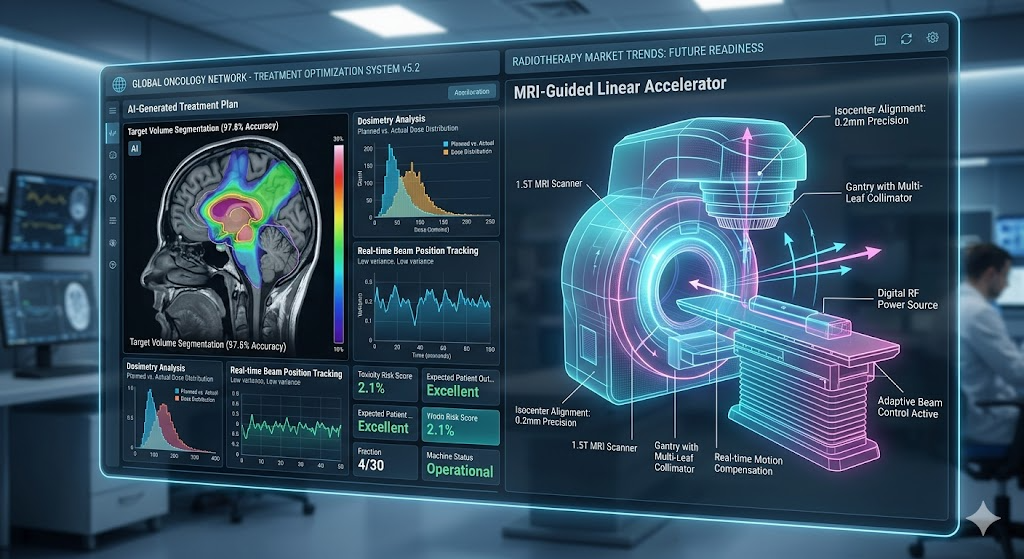
Artificial Intelligence is no longer a “future concept”—it is the backbone of modern radiation oncology. By 2026, AI-driven auto-contouring and treatment planning have reduced manual labor by up to 70%.
- For Providers: This means significantly faster workflows and reduced human error. AI allows clinical teams to focus on complex cases while the software handles the repetitive “heavy lifting” of dosimetry and segmentation.
2. MRI-Guided Therapy: “See What You Treat”
The shift from CT-guided to MRI-guided radiotherapy (MR-Linac) is one of the most significant hardware transitions in a decade. Unlike traditional X-rays, MRI provides superior soft-tissue contrast, allowing clinicians to see the tumor’s movement in real-time during the breath.
- The Advantage: This “biological tracking” enables Adaptive Radiotherapy (ART), where the treatment plan is adjusted on the fly based on the patient’s daily anatomy. This reduces toxicity and spares healthy organs, leading to better patient outcomes.
3. The Rise of Hypofractionation (SBRT/SRS)
Efficiency is the new gold standard. There is a growing trend toward Stereotactic Body Radiotherapy (SBRT) and Stereotactic Radiosurgery (SRS). These techniques deliver higher doses of radiation in fewer sessions (1–5 fractions instead of 20–30).
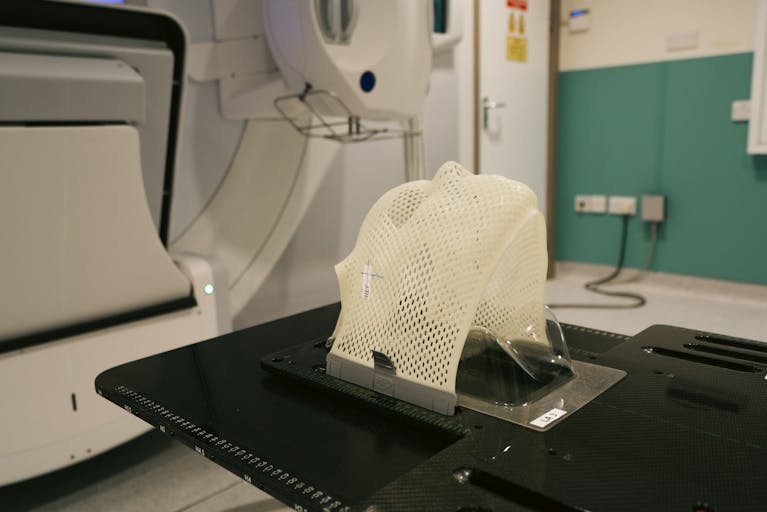
- Impact on Infrastructure: While this reduces the total number of patient visits, it increases the demand for high-precision machines and robust immobilization devices. Providers must balance the increased throughput with the need for rigorous Quality Assurance (QA).
4. Decentralization & Specialized Cancer Centers
The radiotherapy market is seeing a shift away from massive general hospitals toward specialized, boutique oncology chains and regional satellite centers.
- The Trend: To remain competitive, smaller providers are investing in modular LINAC systems and cloud-based planning solutions that allow for remote consultation with world-class experts.
5. Patient-Centricity and Digital Connectivity
In 2026, the “patient experience” is a measurable metric. Wearable devices and patient-reported outcome (PRO) apps are being integrated into radiotherapy workflows to monitor side effects in real-time.
- The Opportunity: Providers who leverage digital health platforms to maintain a continuous loop with their patients will see higher satisfaction rates and better long-term survival data.
Challenges for Providers
Despite the growth, the path forward isn’t without hurdles. High capital expenditure (CapEx) for proton therapy and MR-Linacs remains a barrier, and the global shortage of medical physicists and radiation therapists continues to stress the system. Automation and remote support services will be the essential “safety valves” for these staffing challenges.
Final Thoughts
The future of radiotherapy is precise, personal, and proactive. For healthcare providers, the goal is clear: transition from “one-size-fits-all” radiation to a highly adaptive model that respects the unique biology of every patient.
Are you ready to integrate these technologies into your clinic? The window for digital transformation is open, and those who move first will lead the next decade of cancer care.