2.4mm Medium-Thickness Sheets: The Art of Balance in Wrist Joint & Pediatric Immobilization
In material selection for low-temperature thermoplastic braces, sheet thickness often determines the performance of orthoses. While 3.2mm sheets deliver robust rigidity, they appear bulky on small limbs. Although 1.6mm sheets offer delicate shaping, they lack sufficient strength to resist shear force at major joints.
This is where 2.4mm medium-thickness sheets demonstrate the “golden middle ground”. Achieving an ideal balance between rigidity and flexibility, supportive strength and lightweight design, they excel particularly in external wrist immobilization and pediatric orthopedic correction, embodying sophisticated balancing performance.
I. Wrist Immobilization: Balancing Restricted Motion & Fine Motor Activity
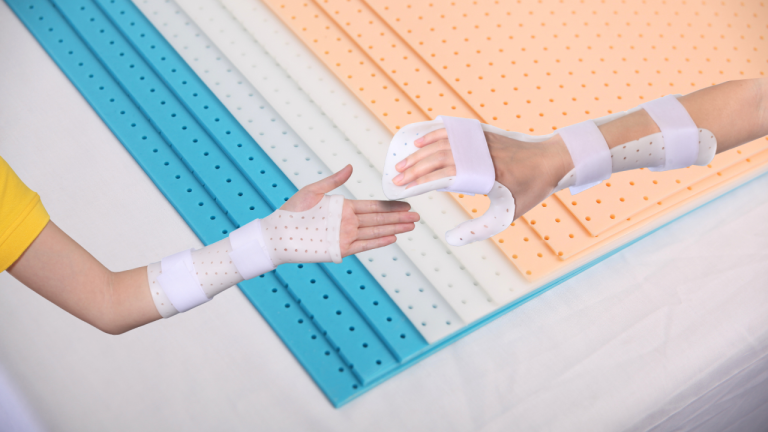
The wrist joint undergoes extensive daily movement and bears complex force loads. Adult wrist braces must limit pronation and supination of the carpals while enabling patients to perform fine grasping movements with fingers.
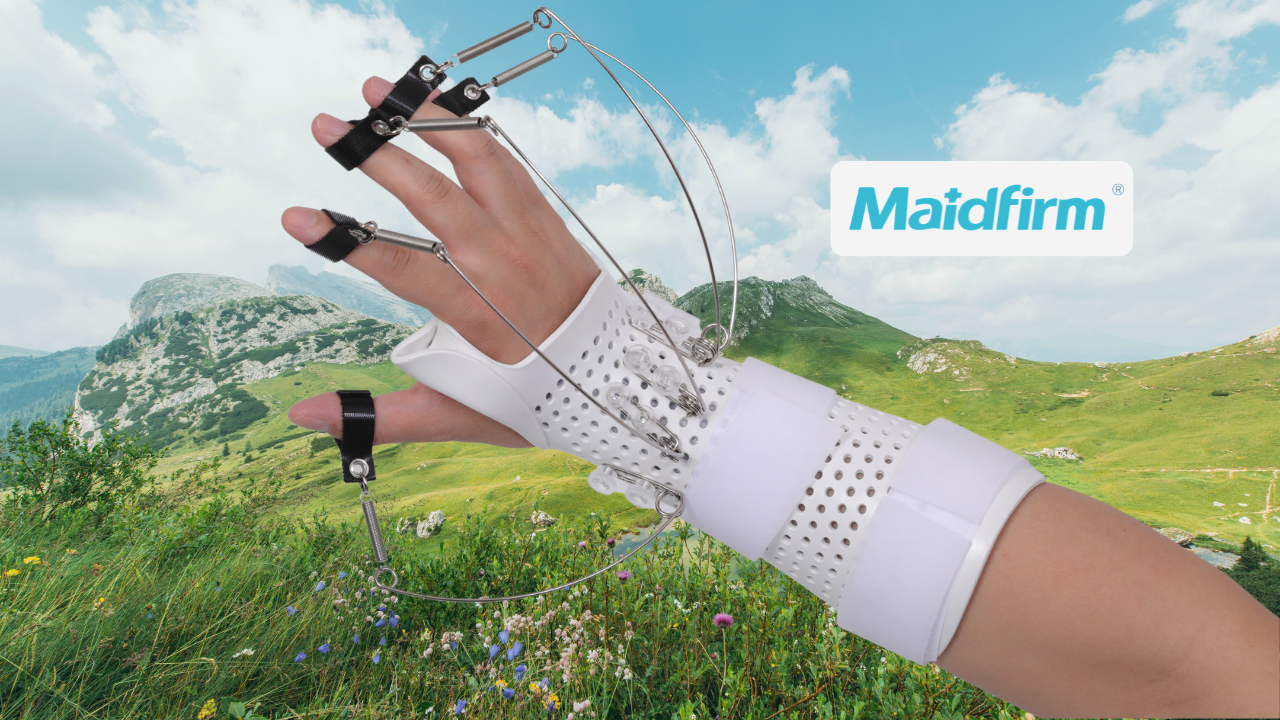
Adequate Rigidity: After curing, 2.4mm sheets (maidfirm medium-thickness series) feature sufficient flexural modulus to counteract involuntary tension generated by forearm muscle contraction, securing static stability following surgery for scaphoid fractures and distal radius fractures.
Preserved Palmar Space: Compared to 3.2mm sheets, the stacked thickness over the thenar and hypothenar eminences is reduced by 25%. This enables precise trimming of brace edges, fully exposing palmar creases. Patients can smoothly operate mobile phones, hold pens or grasp cups with their fingers, even when the wrist is stabilized.
II. Pediatric Immobilization: Balancing Adequate Support & Comfortable Fit
Children are not scaled-down adults. Pediatric orthopedics cases (including greenstick fractures and staged correction for congenital clubfoot) impose stringent requirements on materials. Active children require firm immobilization; yet their delicate skin and rapidly developing bones demand ultra-lightweight construction.
Lightweight Without Sacrificing Performance: The 2.4mm sheet serves as the golden specification for pediatric lower limb bracing and adult upper limb orthoses. Nearly one-third lighter than standard heavy-gauge sheets, it reduces crying and resistance caused by extra limb load, protecting children’s vulnerable shoulder and elbow joints.
Conforms to Soft Tissues: Children possess abundant subcutaneous fat with less prominent bony prominences. Once softened at 65°C, 2.4mm sheets exhibit outstanding malleability. Rehabilitation therapists only need gentle palm pressure to mold the sheet to follow the contours of children’s limbs naturally, preventing local tissue compression.
III. Clinical Practice: Temperature Control & Plasticity Tuning for 2.4mm Sheets
As a material R&D and manufacturing specialist, the technical team at maidfirm has optimized the heat capacity ratio during molecular weight formulation of 2.4mm sheets:
Working Window: 2.4mm sheets soften rapidly in hot water, typically turning fully transparent within 45–60 seconds. After removal and drying, the air cooling working window lasts approximately 3 minutes. This duration allows experienced clinicians to complete perfect molding of the wrist in functional position, while shortening the time children need to remain still.
Advantages of Surface Perforations: 2.4mm sheets are highly suitable for perforated designs. Thanks to moderate thickness, perforations resist collapse under stretching. While maintaining overall structural integrity, perforations create excellent sweat evacuation channels for sweating children and patients wearing wrist braces long-term.
IV. Recommended Classic Application Scenarios
- Mid-to-late stage rehabilitation of distal radius fractures (Colles’ fracture): When transitioning from plaster casts to thermoplastic braces, 2.4mm supports balance protection and light weight.
- Night splints for Carpal Tunnel Syndrome (CTS): Ultra-light construction minimizes sleep disturbance while maintaining the wrist in neutral alignment.
- Pediatric elbow/wrist trauma immobilization: An alternative to bulky traditional bandages, convenient for caregivers to clean children’s skin daily.
V. Conclusion
Moderation creates perfection. The appeal of 2.4mm low-temperature thermoplastic sheets lies in avoiding the pursuit of extreme thickness or ultra-thin profiles. Guided by anatomical and pediatric physiological principles, it delivers customized moderate protection.
maidfirm conducts in-depth technical research on every 0.1mm thickness specification. With scientifically calibrated thickness distribution, we bring greater precision and care to your advanced external fixation protocols.